

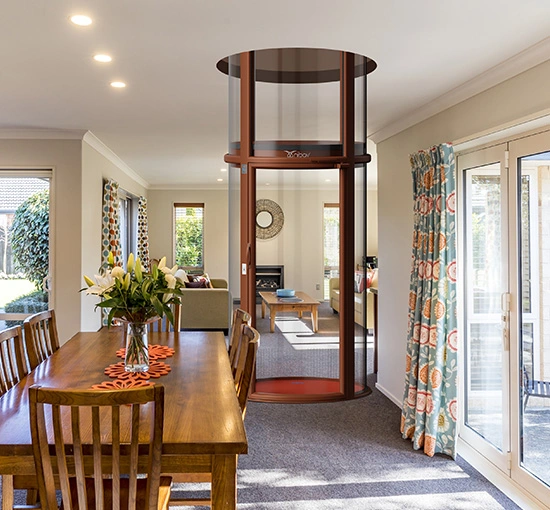
The number one reason homeowners who want a lift never get one is not actually the cost — it is the fear of the cost. The assumption that a house elevator is a six-figure project reserved for developers and show homes keeps thousands of families living with a problem they could solve. When they finally ask for a quote, many are genuinely surprised.
But there is a complication. Home lift pricing is genuinely complex. A search online surfaces a bewildering range — from suspiciously low headline numbers to vague ranges that do not help with actual planning. The problem is that most quoted prices are unit-only prices, which leave out installation, civil construction, and ongoing running costs that can more than double the apparent investment.
This guide resolves that problem completely. It breaks down home lift cost by type, configuration, and market — with total cost of ownership in view, not just the sticker price. By the time you finish reading, you will know exactly what a house elevator costs, what drives the price, and how to evaluate a quote with confidence.
The True House Elevator Cost: Unit Price vs Total Investment
The most important concept in home elevator pricing is the difference between the unit price and the total investment. These are often very different numbers:
| Cost Component | Air-Driven / Vacuum Lift | Traditional Hydraulic Lift |
| Lift unit | MYR 69,900 – 1,79,900 | MYR 80,000 – 200,000+ |
| Civil construction | MYR 0 (none required) | MYR 50,000 – 100,000+ |
| Installation time | 4 – 5 working days | 4 – 12 weeks |
| Annual maintenance | Low — ~90% less than hydraulic | MYR 3,000 – 8,000/year |
| Energy cost | Ascent only (zero on descent) | Both directions consume power |
The takeaway is clear: an air-driven home elevator that appears to cost more on paper can easily represent a lower total investment when civil construction costs are factored in — and significantly lower annual running costs over the lift’s service life.
Home Lift Price by Model: What You Get at Each Level
For Malaysian homeowners evaluating the air-driven lift market — which represents the most practical option for existing homes — here is a realistic picture of what each price band delivers:
Entry Level — From MYR 69,900
Models in this range (such as the Nibav Series III Standard) offer a 749 mm internal cabin, 210 kg capacity, 4 stops, 14+ colour options, emergency descent, and battery backup systems. No civil construction required. For families seeking practical accessibility on a disciplined budget, this is a complete and capable solution.
Mid Range — MYR 1,09,900 to MYR 1,36,900
This band covers models with larger cabins (up to 1,240 mm internal diameter), higher capacity (up to 240 kg), AI and voice control readiness, frameless door designs, advanced suspension systems, and 24+ colour and finish options including Textured, Metallic, and Hydro editions. Ideal for families who want smart home integration and a larger, more comfortable ride.
Premium — MYR 1,19,900 to MYR 1,79,900
The premium segment (Series V range) delivers auto-opening doors, HeartLine personalised cabin engraving, SkyMark illuminated ceiling feature, VividTouch smart touchscreen display, ZeroTrace seamless interior panels, SmartConnect emergency communication, Brake 3.0 precision stopping, and the industry-leading 25-year CoreShield warranty on the motor and vacuum seal. For homeowners investing in a permanent, luxury-level home feature, this represents exceptional long-term value.
What Drives Residential Elevator Cost? 6 Key Price Factors
Understanding the variables behind home lift pricing empowers you to build a realistic budget and compare quotes meaningfully:
- Number of stops: Each additional floor served increases the price. G+1 (two floors) is the starting point; G+3 (four floors) commands the highest price within the residential range.
- Cabin size: Standard models (830 mm internal) suit 1–2 ambulatory passengers. Max models (1,240 mm) accommodate wheelchair access and carry a higher price for the extra space and engineering.
- Technology tier: Auto-opening doors, smart display integration, voice and app control, and GSM communication features increase the price and the quality of the daily experience.
- Finish and customisation: Standard colour options are included at base price. Specialist finishes — Hydro Matt, Hydro Gloss, Metallic editions — may carry a premium. Personalised engraving and lighting customisation are model-specific additions.
- Warranty scope: Models with extended warranty coverage on the motor and vacuum seal — up to 25 years on premium products — carry a higher purchase price that is offset by significantly lower long-term repair risk.
- Site conditions: Prepared, accessible sites require minimal additional work. Properties with complex layouts, narrow access corridors, or strata management approval processes may affect the total project cost.
The ROI Case: Why Home Lift Price Is a Property Investment, Not a Cost
Framing a home elevator purely as a cost misses a critical part of the financial picture. Here is why the investment case is often stronger than homeowners assume:
- Property value uplift: A well-installed home elevator consistently adds more to resale value than it costs to install, particularly in the landed and semi-luxury residential segment. Buyers increasingly treat it as a premium differentiator rather than an unusual feature.
- Avoided future costs: Preventing a serious fall for an elderly family member avoids medical costs, rehabilitation costs, and potentially the cost of moving to an assisted living facility — any of which would dwarf the elevator investment many times over.
- Daily quality of life: The daily value of not negotiating stairs with groceries, a sleeping child, mobility limitations, or physical fatigue is real and recurring — 365 days a year, for decades.
- Future-proofing: A home with a lift does not need to be sold or renovated when family mobility needs change. The home adapts to the family, not the other way around.
What to Do Before Requesting a Quote
To get a meaningful, comparable quote for your house elevator, gather the following information before contacting suppliers:
- Number of floors: How many levels will the lift serve? G+1, G+2, or G+3?
- Total travel height: Floor-to-ceiling height of each level, multiplied by the number of floors served
- Available floor space: The clear square footage in the area you are considering for installation
- User requirements: Will a wheelchair user or someone with an attendant use the lift regularly? If yes, prioritise Max models.
- Design preferences: Do you want a lift that matches specific interior colours or finishes?
Armed with this information, you can request a genuinely itemised quote that covers the lift unit, all installation components, and after-sales support — with no surprises once the work begins.
Hidden Costs to Ask About Before Signing
Even with reputable suppliers, there are cost elements worth clarifying explicitly before committing to a purchase. These are not necessarily dishonest omissions — they are sometimes genuine assumptions that differ between supplier and buyer:
- Making-good work around floor openings: Cutting the circular floor aperture is included in installation, but finishing the surrounding floor material to a clean edge may be a separate item depending on the floor type and finish standard expected
- Electrical supply upgrade: Some installations require a dedicated circuit or an upgrade to the home’s electrical supply capacity. Confirm whether this is within scope or requires a separate electrician engagement
- Strata or building management approval: If your property requires management committee approval, allow time in your project plan — though this is typically a time cost rather than a financial one
- Extended warranty or service contract: The base warranty covers the lift unit, but extended service contracts provide additional peace of mind. Understand the cost and scope before installation begins
Getting all of these items in writing before signing protects you from invoice surprises and ensures the quoted total cost is genuinely the total cost.
Frequently Asked Questions
1. What is the cheapest house elevator available in Malaysia?
A: The most affordable air-driven home lifts in Malaysia start from MYR 69,900, including installation and no civil construction costs. This represents the most accessible entry point for residential elevator ownership in the current market.
2. Does home lift price include installation in Malaysia?
A: For air-driven vacuum lifts, reputable suppliers include installation in the quoted price. Always confirm this explicitly — and confirm there are no additional charges for civil construction, structural reinforcement, or site preparation.
3. Is a home elevator worth the cost?
A: For multi-storey homes with elderly residents, mobility-impaired users, or young children, the safety and daily quality-of-life benefits are significant. Combined with measurable property value uplift, most homeowners find the investment pays for itself over a relatively short horizon.
4. What is the most expensive part of a home elevator installation?
A: For traditional hydraulic or traction lifts, the most expensive component is typically the civil construction — pit excavation, shaft building, and machine room construction can cost MYR 50,000 to MYR 100,000 on top of the unit price. Air-driven lifts eliminate this cost entirely.
5. How do I get an accurate residential elevator cost quote?
A: Request a site feasibility assessment. Bring details on the number of stops required, travel height, available floor space, and user requirements. The team will provide a fully personalaised quote with no hidden costs.
