
You’ve narrowed your search down to two fundamentally different technologies: an air driven home lift and a traditional cable or hydraulic system. Both promise safe, reliable vertical movement between floors, but they achieve it through completely different engineering, and that difference matters more than most comparison charts let on.
The trouble is, most comparisons stop at price and installation time, without actually explaining the mechanical differences that drive those numbers in the first place. Without understanding what’s actually happening inside each system, mechanically, it’s hard to judge which technology will genuinely hold up better over ten or twenty years of daily use in your specific home.
This comparison goes a level deeper, looking at how each technology actually works, what that means for noise, lifespan, and structural impact, and which scenarios genuinely favour one system over the other. By the end, you’ll be evaluating based on engineering substance, not just a glossy brochure.
Air Driven Home Lift Mechanism vs Traditional Lift Mechanism
A traditional home lift typically relies on one of two mechanisms: a hydraulic piston pushing against pressurised lubricant, or a motor-driven cable and counterweight system similar to commercial elevators, scaled down for residential use. Both require substantial supporting infrastructure, a pit below floor level, a machine room, and either hydraulic fluid reservoirs or a counterweight system running alongside the cabin.
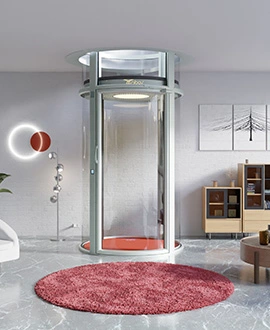
An air driven home lift uses a fundamentally simpler principle: a turbine creates an air pressure differential within a sealed, self-supporting cylinder, and that pressure difference moves the cabin up or down. There’s no hydraulic fluid, no counterweight, and no separate machine room, the entire mechanism lives within the cylinder itself.
This distinction isn’t just an engineering curiosity, it directly explains why the two technologies feel so different in practice. A hydraulic system’s pump has to actively push against pressure the entire time the cabin ascends, while an air-driven system’s turbine only needs to shift a relatively small volume of air, a comparatively lighter mechanical task that shows up in lower running costs and reduced wear over time.
Vacuum Elevator Malaysia Homeowners Choose: Noise and Vibration Differences
Mechanical complexity translates directly into noise and vibration. Hydraulic systems involve a pump running under pressure, which produces a consistent mechanical hum, while cable-driven systems can generate vibration and noise as the cable runs over pulleys and the counterweight moves in the opposite direction.
A vacuum elevator Malaysia homeowners are increasingly choosing operates with meaningfully less mechanical noise, since the primary moving components are the turbine, active briefly during ascent, and the air itself. Many homeowners specifically choose air-driven systems for this reason when the lift will be positioned near a living area or bedroom rather than tucked away in an isolated service zone.
Pneumatic Elevator Malaysia Buyers Should Know: Lifespan and Maintenance Comparison
Lifespan and maintenance requirements differ significantly between the two technologies, largely due to differences in moving parts. Hydraulic systems require periodic fluid replacement and are susceptible to seal wear and potential leaks over time, both of which necessitate regular professional servicing to avoid deterioration in performance or safety.
A pneumatic elevator Malaysia suppliers install generally has fewer wear-prone components, no hydraulic fluid to replace, and a simpler overall mechanical footprint. This typically translates to less frequent servicing requirements and a lower total cost of ownership over the lift’s operational lifespan, though routine maintenance of seals, sensors, and the turbine motor remains important regardless of technology chosen.
Residential Lifts Malaysia Homes Need: Structural Impact and Installation
This is where the two technologies diverge most dramatically in practical terms. Traditional residential lifts Malaysia homeowners have historically installed require a pit dug below floor level, a machine room to house the pump or motor, and often structural reinforcement to support the counterweight system, altogether representing significant, invasive civil work.
Air-driven systems are self-supporting and require none of this. The cylinder stands independently on a flat floor, needing only a single-phase power connection, which dramatically reduces both the structural impact on your home and the installation timeline, often from months down to days.
Home Elevators Malaysia Buyers Should Match to Their Specific Situation
Neither technology is universally “better” in every scenario, though air-driven systems suit the overwhelming majority of Malaysian residential situations. Traditional hydraulic or cable systems may still make sense for very heavy-duty, high-frequency commercial-adjacent use cases, or specific architectural situations where a pit and machine room were already planned into the building design from the outset.
For the typical home elevators Malaysia homeowners are installing, especially retrofits into existing properties, air-driven technology’s combination of lower noise, simpler maintenance, and dramatically reduced structural impact makes it the more practical choice in nearly every residential context.
Making Your Decision: Questions to Ask Based on the Technology
Once you understand the mechanical differences, ask suppliers pointed, technology-specific questions rather than generic ones. For a traditional system, ask about hydraulic fluid replacement schedules and what happens structurally if a leak ever occurs. For an air-driven system, ask about turbine lifespan, seal maintenance intervals, and how the cylinder’s materials hold up specifically in Malaysia’s humidity.
These technical questions reveal far more about long-term reliability than a simple price comparison, and a supplier who answers them confidently and specifically is generally more trustworthy than one who deflects to generic reassurances.
It’s also reasonable to ask each supplier for documentation, test certificates, or independent certification references rather than accepting verbal assurances alone. A technology comparison is only as useful as the accuracy of the information behind it, so pushing for specifics rather than settling for broad claims protects you from basing a major decision on marketing language rather than engineering fact.
Why Nibav’s Air-Driven Engineering Outperforms Traditional Systems
Nibav’s air-driven lifts eliminate the hydraulic fluid, counterweights, and machine room infrastructure that traditional systems depend on, replacing them with a precision-engineered turbine and sealed cylinder system. Every model is TÜV NORD certified, confirming the underlying mechanical engineering meets recognised international safety benchmarks, not just the finished product’s exterior specifications.
With over 10,000 trusted families worldwide and a physical experience centre in Kuala Lumpur, Nibav has extensive, verifiable experience applying this technology specifically within Malaysian residential settings.
What Sets Nibav’s Technology Apart From Traditional Systems
Nibav’s turbine and valve engineering delivers smooth, whisper-quiet operation without the mechanical hum typical of hydraulic pumps, while the self-supporting cylinder design eliminates structural reinforcement requirements entirely. Combined with corrosion-resistant materials suited to sustained tropical humidity and a motor warranty of up to 25 years, Nibav’s air-driven engineering is built for genuine long-term reliability, not just an easier initial installation.
Frequently Asked Questions
- Is an air driven home lift more reliable than a traditional hydraulic lift?
Air-driven systems generally have fewer wear-prone components and no hydraulic fluid to maintain, which typically translates to less frequent servicing and a lower long-term maintenance burden. - Which technology is quieter, vacuum or hydraulic?
Vacuum, or air-driven, lifts are generally quieter, since they rely on a turbine operating briefly during ascent rather than a continuously running hydraulic pump or mechanical cable system. - Do traditional home lifts last longer than air-driven models?
Lifespan depends more on build quality and maintenance than technology type alone, though air-driven systems’ simpler mechanical footprint often means fewer failure points over time. - Is a pneumatic elevator suitable for a multi-storey home in Malaysia?
Yes. Pneumatic elevators are commonly installed in multi-storey Malaysian homes and are particularly well suited to retrofits, since they avoid the pit and machine room traditional systems require. - When does a traditional lift make more sense than an air-driven one?
Traditional systems may suit very heavy-duty or high-frequency use cases, or homes where a pit and machine room were already structurally planned from the outset.